
Language
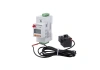
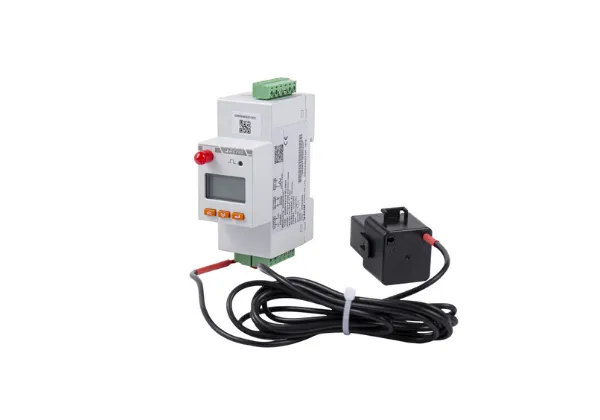
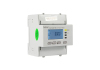
ADW310 Single Phase AC Wireless IoT Energy Meter
■ CE Certified
■ 4G LTE/ WiFi/ LoRa/ LoRaWAN/ RS485 Communication
■ MQTT/ Modbus TCP/ Modbus RTU Protocol
■ Single Phase AC 220~264Vac L-N
■ 20(100)A CT Connect
■ 35mm DIN Rail Installation
■ Application: Factories, Schools, IoT Energy Management etc.


▋ Description
ADW310 is a compact 1-phase DIN-rail wireless IoT energy meter designed for real-time monitoring of energy, voltage, current, power factor and frequency in low-voltage networks. It supports split-core CTs up to 100A for easy installation, and offers multiple communication options including 4G, Wi-Fi, LoRa, LoRaWAN and NB-IoT. With functions such as pulse I/O, DI/DO and dual temperature monitoring, ADW310 enables seamless integration with cloud, SCADA, EMS. It is ideal for smart grid, solar net-metering, EV charging analytics, building sub-metering applications.
▋ Common Applicaiton

 |
 |
 |
 |
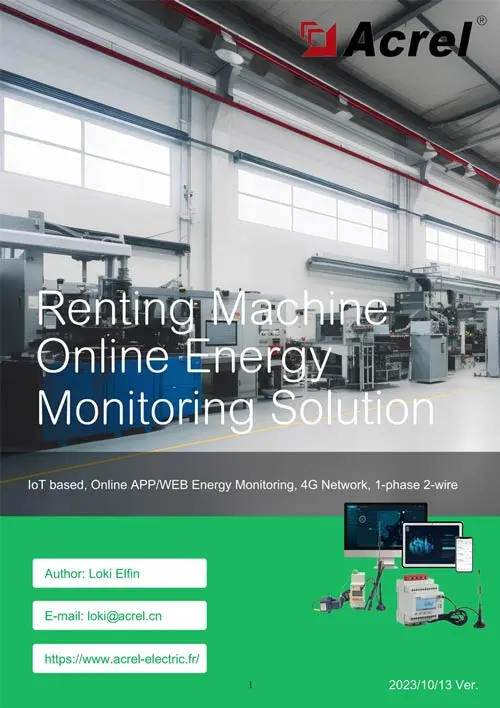
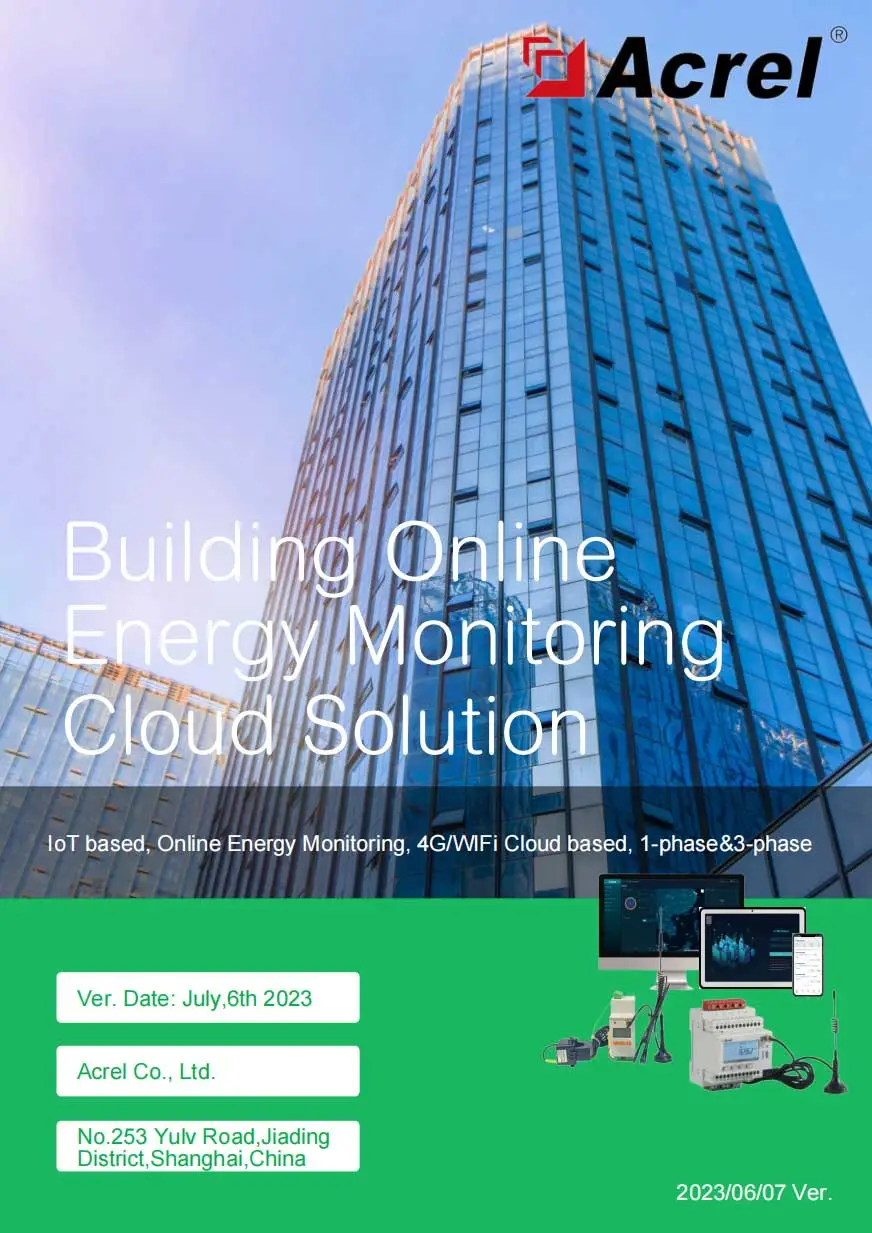
▋ Scenario Solution Sample
 |
 |
|
| Download [PDF 6.66MB] | Download [PDF 24.10MB] |
▋ Product Features

|
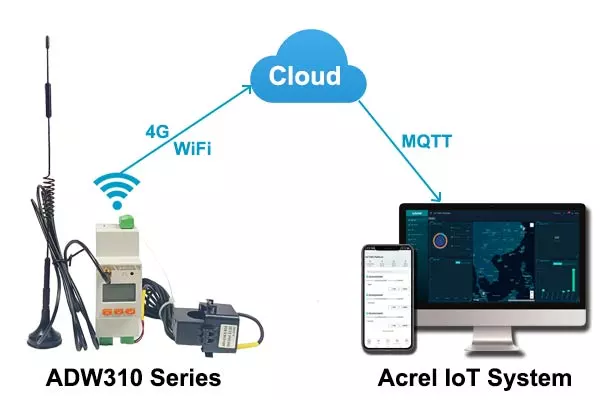
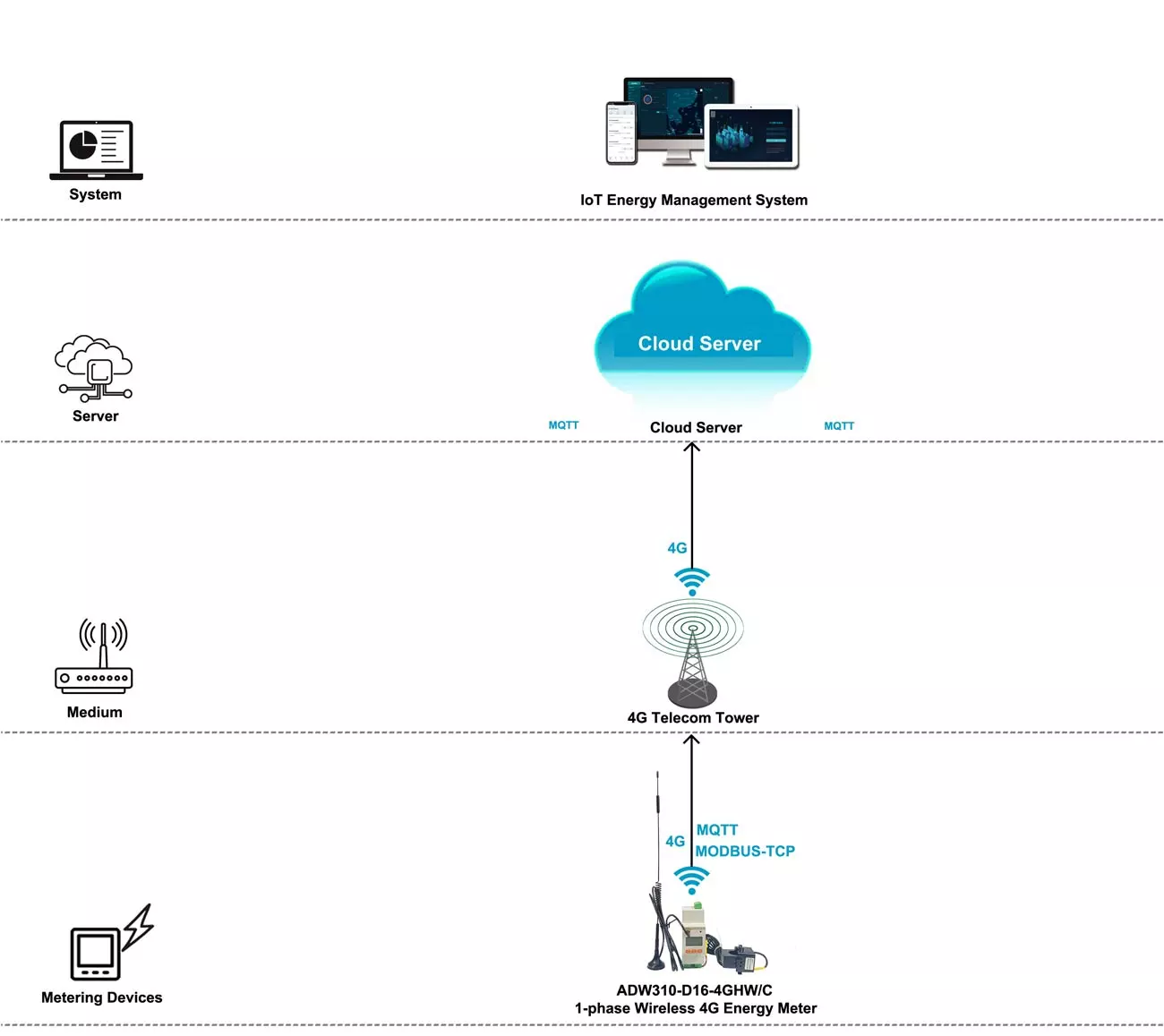
Online&Remote Energy Monitoring ● Paired with Acrel IoT Energy Monitoring System ● PC Access via IoT EMS WEB ● Mobile Phone Access via IoT EMS APP ● 4G Wireless Communication (Global) ● WiFi Wiress Communication (2.4GHz) ● Support MQTT, MODBUS-TCP protocol ● Support standard RS485 interface (MODBUS-RTU) |
 |
|
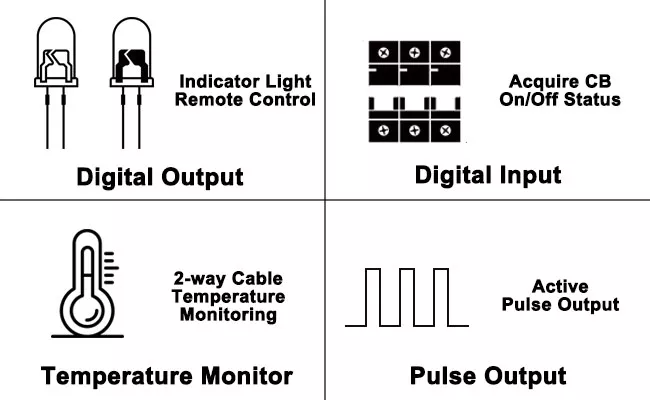
Multiple Extra Function ● 1-channel DO (Digital Ouput) ● 1-channel DI (Digital Input) ● 2-channel Cable Temperature Monitoring ● Active Pulse Output |
|
|
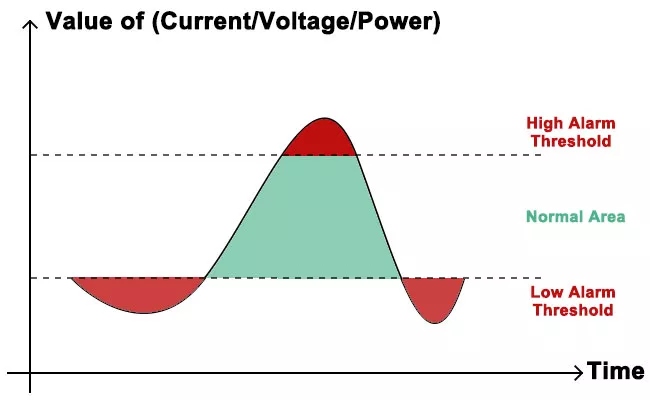
Alarm Function ● Over/Under Current ● Over/Under Voltage ● Over/Under Power |
|
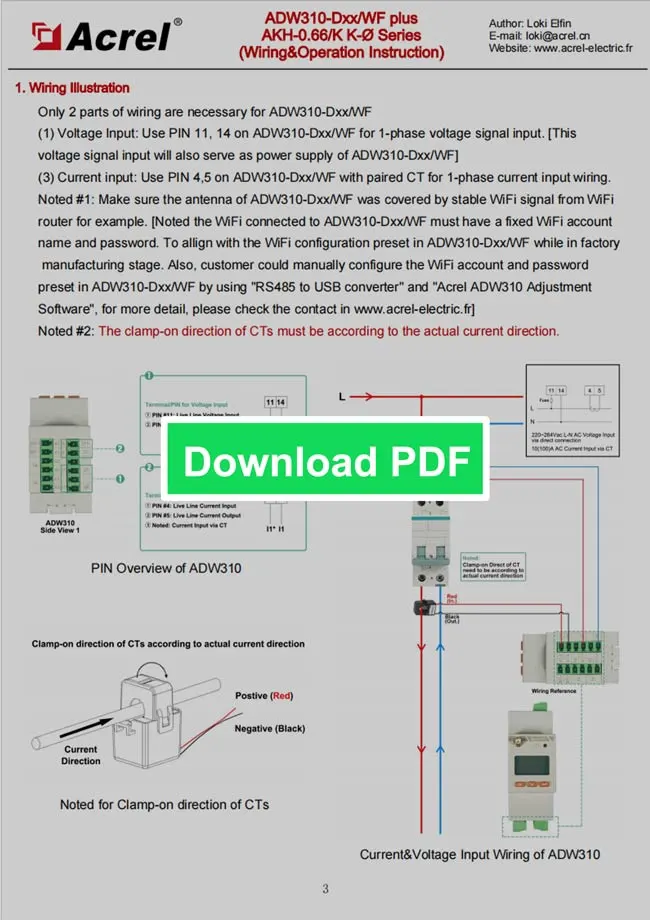
▋ Wiring Illustration
|
|
Download Intro File |
|


 |
 |
|
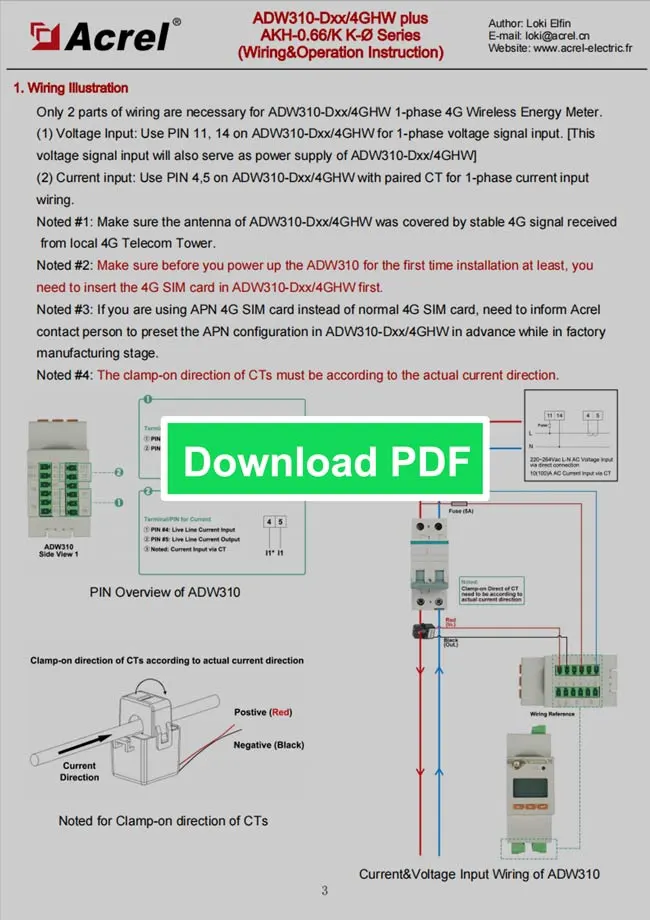
| ADW310-Dxx/4GHW Wiring&Installation Instruction (1P2W) | ADW310-Dxx/WF Wiring&Installation Instruction (1P2W) |
|
|
PIN Overview |
|
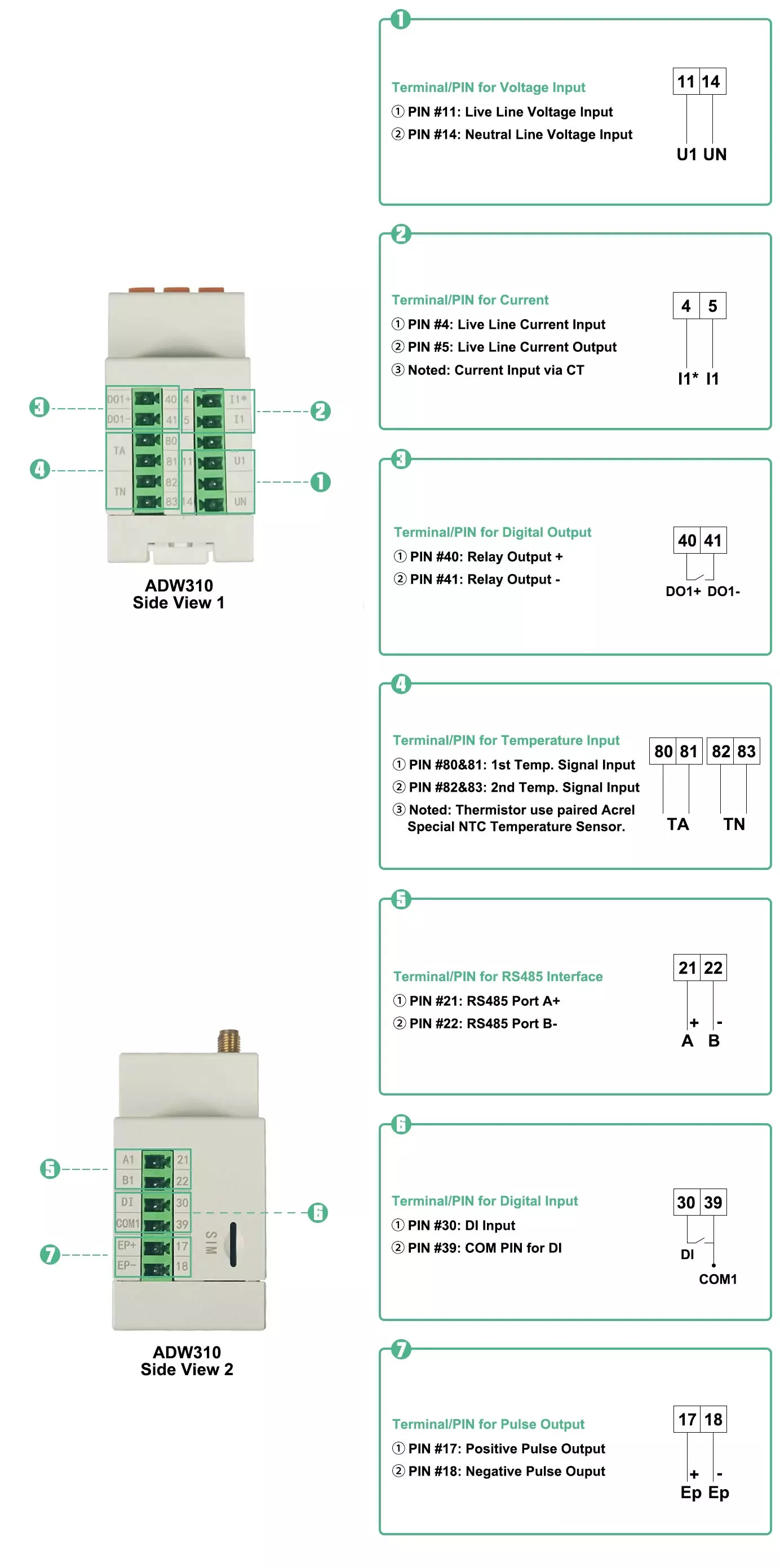 |
| PIN/Terminal Overview of ADW310 Series |
|
|
Wiring Diagram |
|
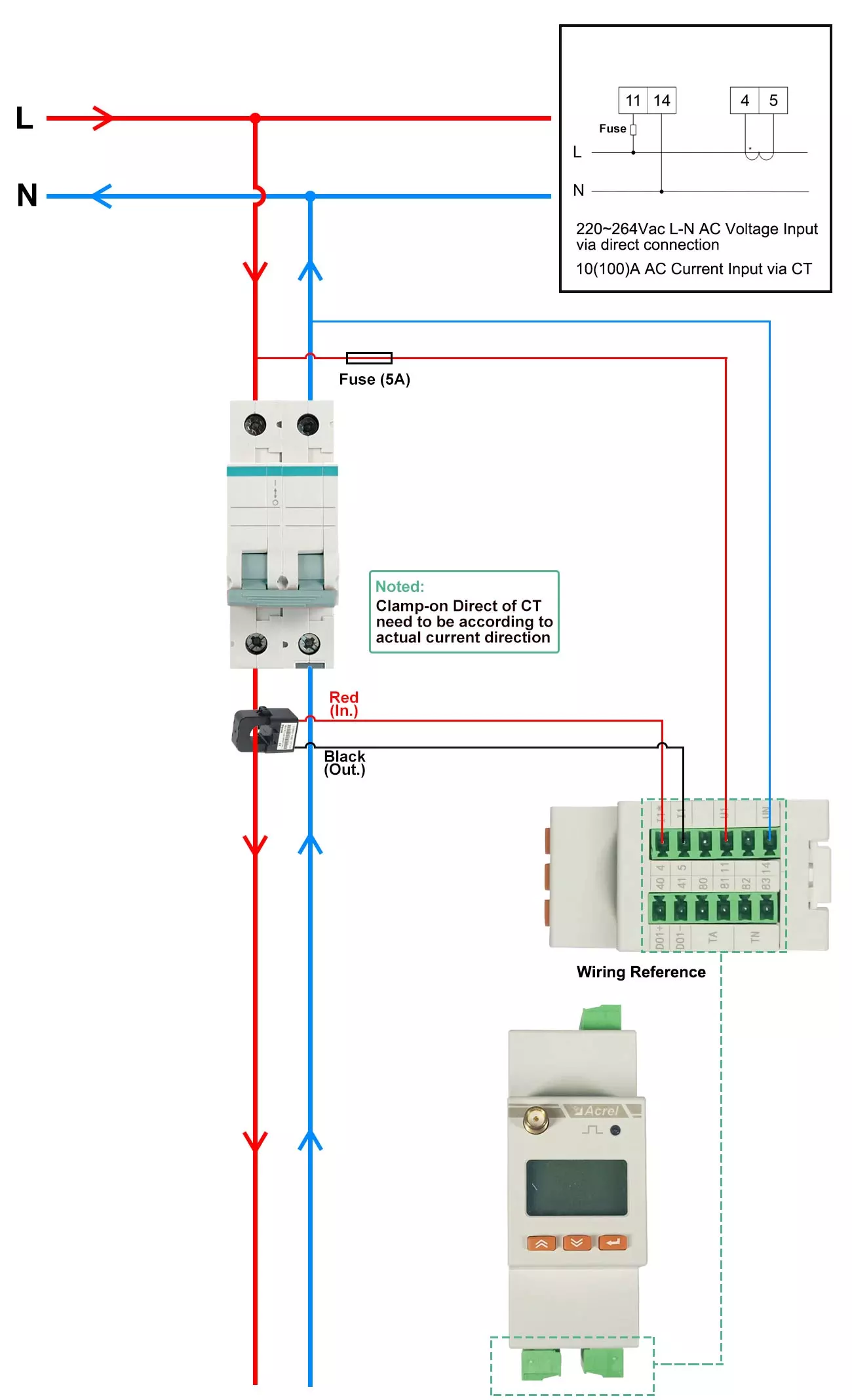 |
| 1-phase 2-wire Wiring Diagram (Voltage&Current Input) |
▋ Dimension&Packaging
|
|
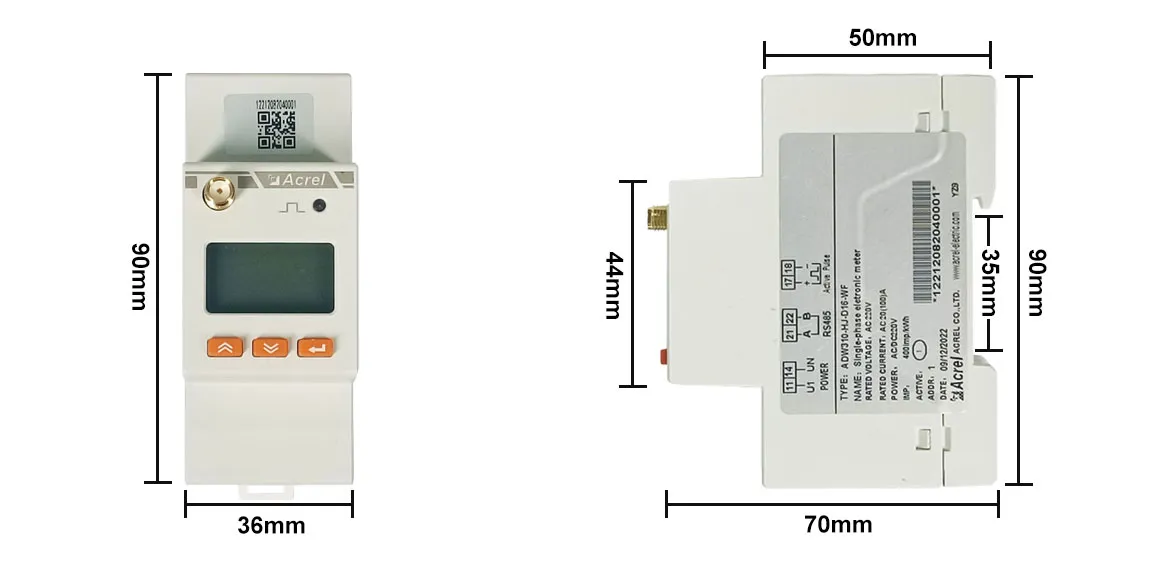
Outline Dimension |
|
|
|
| Dimension of ADW310 (Main Body) |
|
|
| Dimension of paired CT [Main Body] for ADW310 |
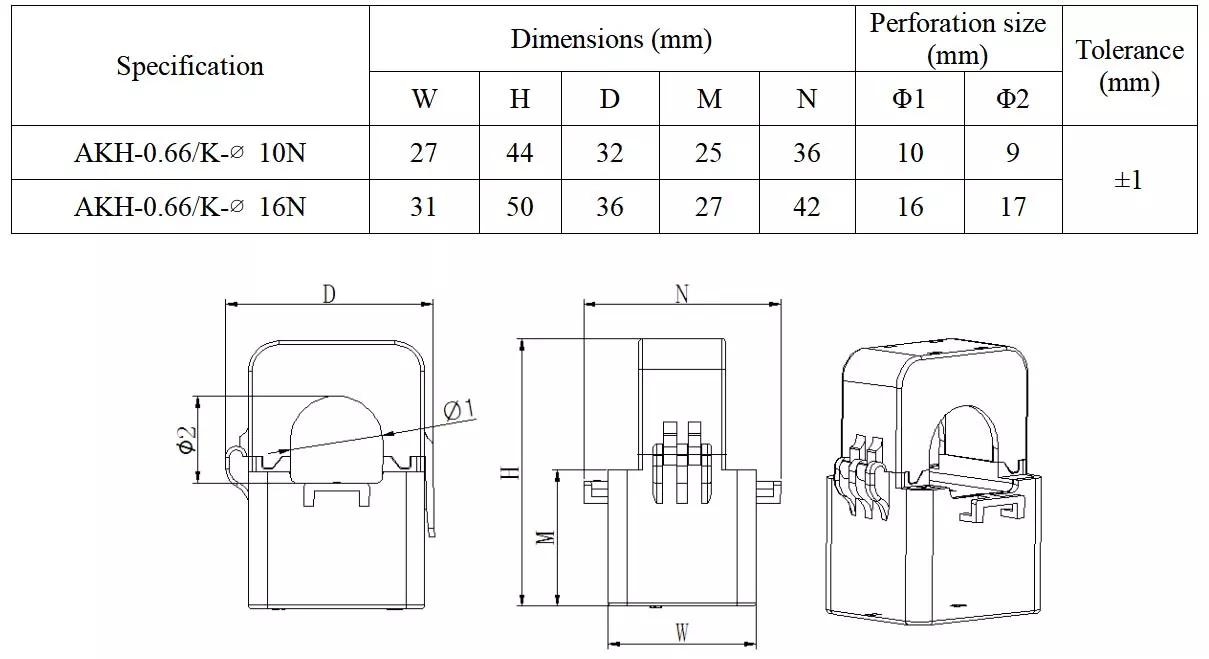
|
|
| Dimension of paired CT [Secondary Output Cable] for ADW310 |
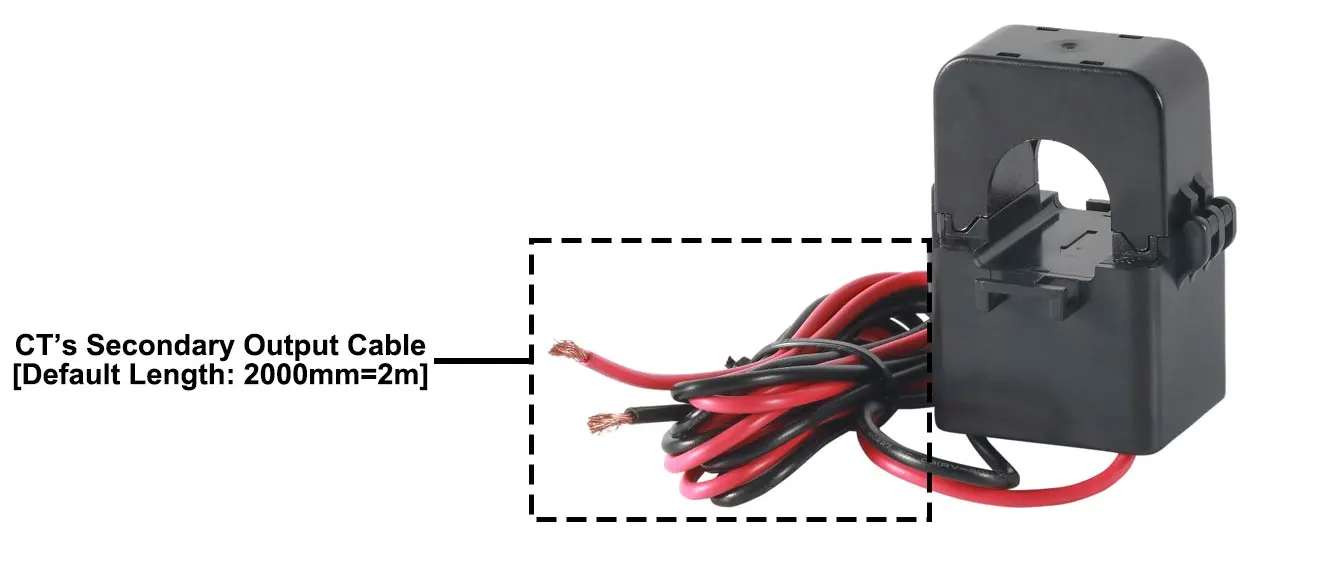
|
|
About Packagement |
|
|
Packaging Overview (Minimum) |
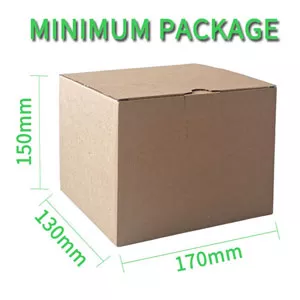 |
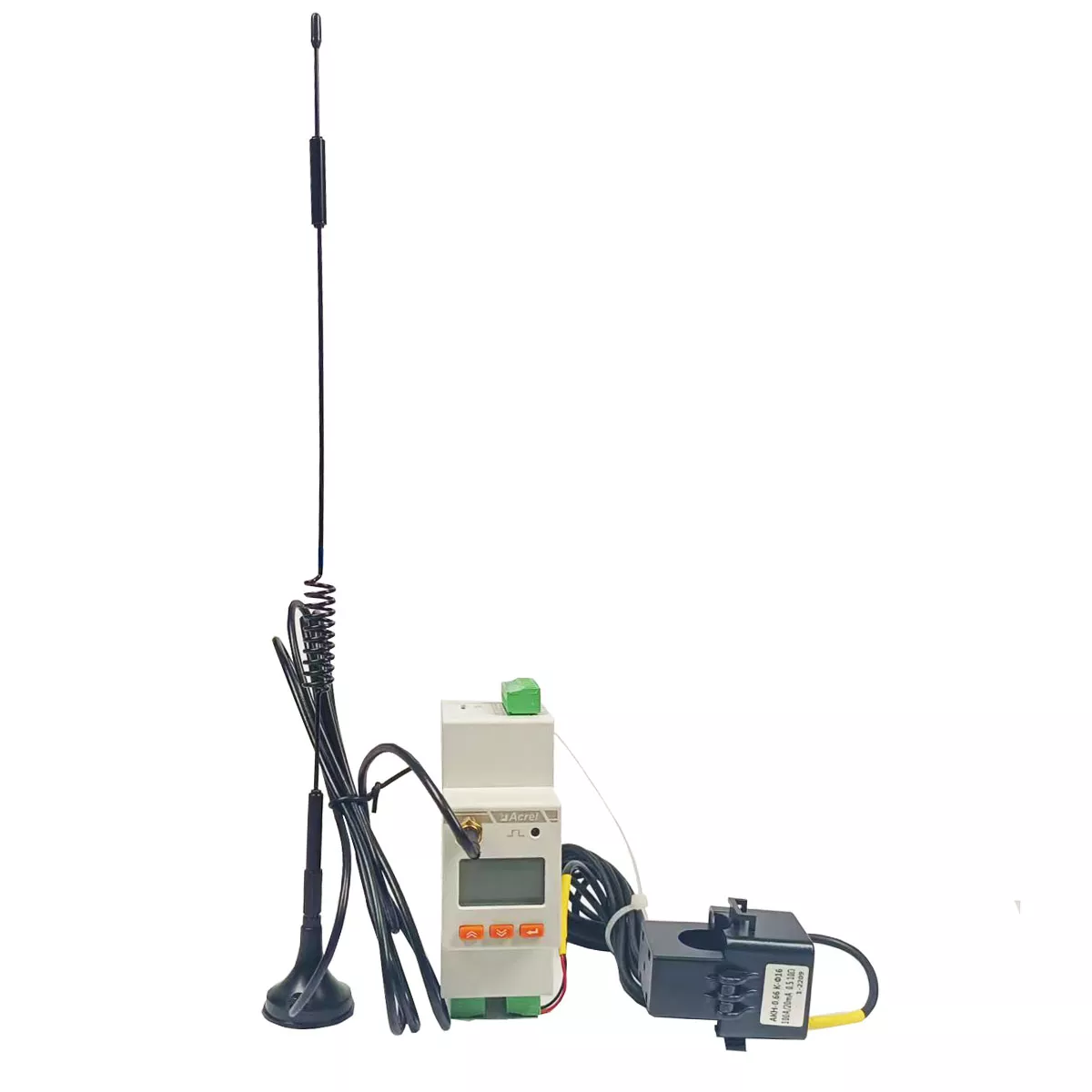 |
|
Packing Dimension and Weight (Minimum) |
Minimum Package Contain 1 pcs Products Dimension: 170mm*150mm*130mm
|
Total N.W. (1 pcs) 0.233 KG |
|
Packing Dimension and Weight (Large) |
Large Package Contain 36 pcs Products Dimension: 540mm*530mm*490mm
|
Total N.W. (48 pcs) 10 KG |
|
Average Lead Time |
Manufacturing: 3~4 days (If paired with system need extra 1~2 days for adjustment)
|
Shippment: 8~9 days (World Wide Shipment) |
|
Product HS Code |
9028301300
|
|
|
CO Country of Origin |
China
|
|
▋ Application in IoT Solution
|
|
4G Based Solution |
|
|
|
WiFi Based Solution |
|

▋ Common FAQ
Q:What's the biggest advantage of ADW310?
A:ADW300 has its built-in wireless communication module which allow it to realize 4G LTE, WiFi upstream communication without using extra IoT gateways. For the application scenarios when the meters can't be of centralized installation, ADW310 will usually be the best option for monitor 3-phase circuits that were far from each other.
Q:How should I deal with RS485 network communication malfunction?
A:First, check if the wiring of RS485 communication line was loosen or wired incorrectly.(like reversely wiring the A,B terminal).
Next,inspect if the meter’s setting of address, baud rate, check bit was correct by using keypads on the meter.
Q:Which part of wiring was necessary for ADW310 to gain some basic electricity parameters monitoring?
A:Normally, only current input wiring via CT and voltage input wiring via direction connection was necessary for ADW310 to realize basic metering function.
Q:What's the power supply for ADW310 Series
A:Voltage input of ADW310 also serve as the power supply of ADW310 Seires. Be aware the rated/max voltage input range must be within the range of 85~265Vac L-N.
Other Question? Please contact us and we will get back to you as soon as possible.
1. Function Overview
| Function | Description |
|
Measurement
(Standard)
|
Single-phase AC Active&Reactive Energy (both forward and backward), Active Power, Reactive Power, Current, Voltage, Frequency, Power Factor, Apparant Power, Frequency |
|
Measurement
(Optional)
|
Temperature Measurement:2-channel (Live line,Neutral line) Cable Temperature Monitoring; Thermistor:NTC; Range: -40~+99℃; Accuracy:±2℃ |
|
Communication
(Standard)
|
RS485 Port with Modbus-RTU protocol - 1 start bit,8 data bit,1 stop bit,no parity; Baud Rate 1200~38400 bps etc. Infrared Communication - Constant Baud Rate 1200 bps |
|
Communication
(Optional)
|
4G LTE - Normal Communicaiton Module Support: LTE-FDD: B1/B3/B5/B8; LTE-TDD:B34/B38/B39/B40/B41 4G LTE - Global Communication Module Support: LTE-FDD:B1/B3/B5/B7/B8/B20/B28; LTE-TDD:B38/B40/B41 |
|
WiFi - Support 2.4GHz or 5GHz |
|
|
Protocol (For wireless Communication): MQTT and MODBUS-TCP |
|
|
Display
(Standard)
|
LCD Display and LED Indicator |
|
HMI
(Standard)
|
Keypads Programming: Setting of CT/PT Ratio, Communication, Phase Wiring and etc |
|
Software
(Standard)
|
Adjustment Software: Setting of Data Upload Interval, WiFi configuration (Account&Password), Server Address, Port and etc |
|
Alarm Function
(Standard)
|
Undervoltage, Overvoltage, Undercurrent, Overcurrent, Underload, Overload, Communication Disconnection and etc |
|
I/O Function
(Optional)
|
1-channel DI (Digital Input) 1-channel DO (Digital Output) |
2. Main Parameters
| Parameter | Description&Value | |
|
Voltage
Input
|
Rated Voltage |
220~264Vac L-N |
| Reference Frequency | 45~65Hz | |
| Power Consumption | <0.5VA (each Phase) | |
|
Current
Input
|
Rated Current | 20(100)A AC |
| Starting Current | 1% Ib (Class 0.5); 4% Ib(Class 1) | |
| Power Consumption | <1VA (each Phase) | |
|
Phase
Wiring
|
1P2W | 1-phase 2-wire |
|
Measurement
Performance
|
Standard |
GB/T17215.322-2008,GB/T17215.321-2008 |
| kWh Accuracy | Class 1 | |
|
Pulse
|
Width of Pulse | 80±20ms |
| Pulse Constant | 1600imp/kWh; | |
3. Environment
| Condition | Description&Value |
|
Temperature
|
Operating Temperature: -25℃~+55℃; Storage Temperature: -40°C ~+70°C |
|
Humidity
|
≤95%RH,no condensation,without corrosive gas |
|
Altitude
|
≤ 2000m |
Send your message to this supplier
Related Products






Explore Acrel’s Solutions Now!
Empowering Smarter Energy Management for a Sustainable Future.
Contact US
Product Information
Quantity
Unit
Piece
Support order samples, customization, wholesale direct, and complete payment. If the product you look for does not have corresponding customized content, pls fill out the form below to contact us, and we will reply ASAP.