Against the backdrop of increasingly stringent EU EPBD Energy Performance of Buildings Directive and ESG sustainability policies, energy‑intensive chain formats including supermarkets, convenience stores, hotel chains, logistics outlets, coffee shops and catering businesses are facing mandatory pressure to cut carbon emissions.
Many multi‑site chain enterprises are plagued by geographically dispersed stores, fragmented metering data, high on‑site commissioning costs and cumbersome cross‑regional financial reconciliation. Traditional manual operation‑maintenance modes can no longer meet European market requirements for traceable energy data, carbon accounting and compliance reporting.
EIOT delivers a lightweight software‑hardware integrated energy‑saving retrofit solution, specially built for distributed chain sites. It realizes group‑wide unified energy visibility and refined energy consumption management, enables cost‑effective retrofits, and helps enterprises achieve EU sustainability compliance targets.
一、Core Pain Points Faced by European Chain Enterprises
-
1.Data silos hindering data‑driven decision‑making
Energy‑consumption data from scattered stores are isolated from one another. Headquarters cannot obtain real‑time aggregated consumption data, which impedes energy‑efficiency optimisation and fails to satisfy regulatory data‑traceability requirements.
-
2.Poor cost‑effectiveness for single‑site renovation
Individual outlets are relatively small‑scale. Deploying standalone meter‑reading or billing systems involves high investment, customised roll‑outs bring heavy costs, resulting in unsatisfactory return‑on‑investment.
-
3.Heavy workload for financial reconciliation
Utility bills from cross‑regional stores rely on manual compilation and statistics, generating high labour costs and risks of human error in financial reconciliation.
-
4.Demanding requirements for data reliability and access control
European enterprises require high‑stability data with support for automatic data backfill upon network interruption, as well as complete organisational structure and role‑based permission systems.
-
5.High barriers for on‑site commissioning
Conventional IoT platforms require on‑site configuration by skilled technicians. Large‑scale roll‑out across numerous stores suffers from long project cycles and elevated overall costs.
-
6.Exorbitant on‑site implementation costs
Wide geographic distribution of sites pushes up labour, travel and subsequent maintenance expenses throughout the retrofit lifecycle.
二、EIOT Integrated Solution for Chain Stores
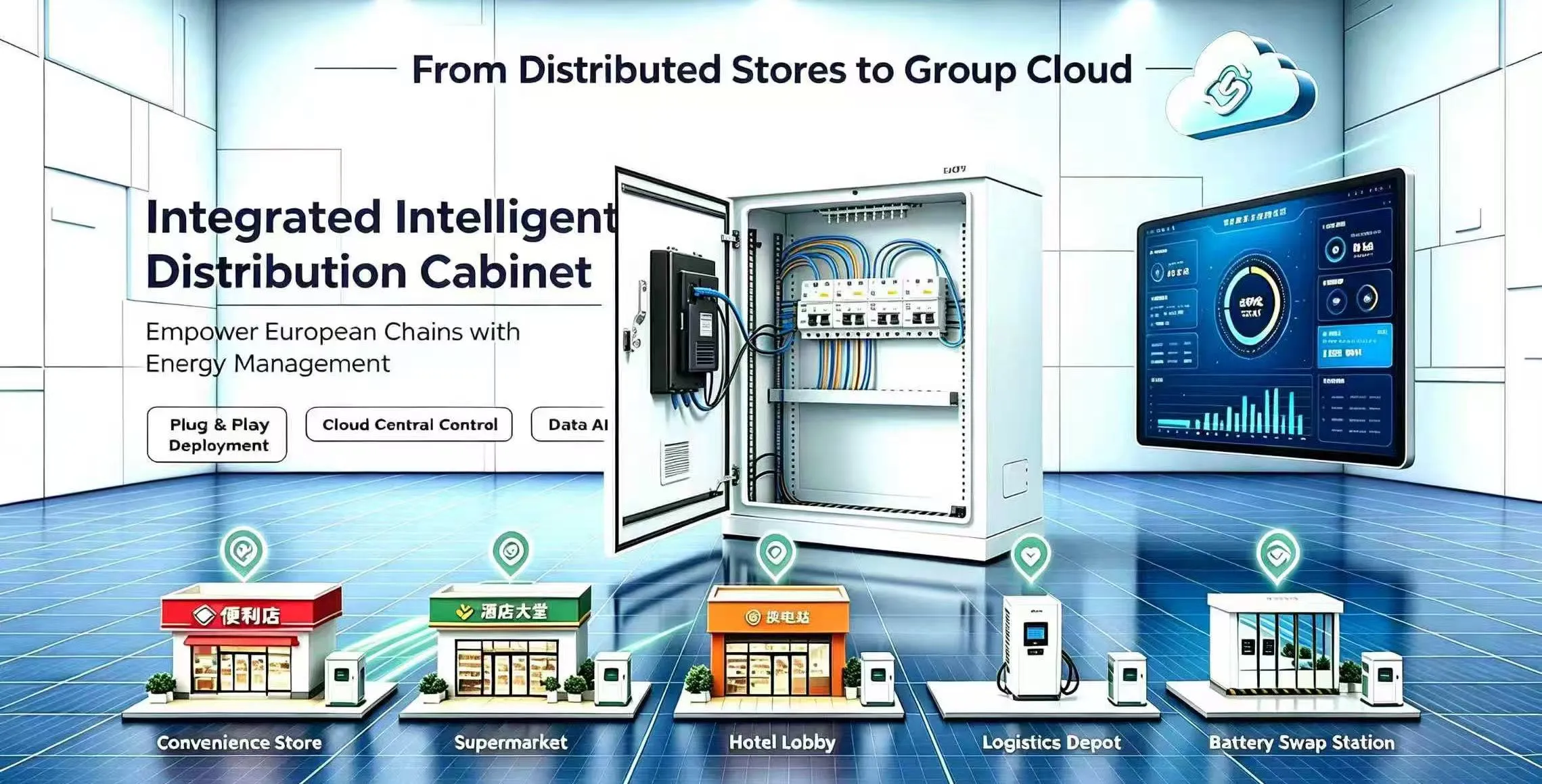
At the core of the solution is a factory‑pre‑configured intelligent distribution cabinet deployed at each site. Pre‑wiring and pre‑commissioning are completed in‑factory to greatly reduce on‑site construction complexity, suitable for mass roll‑out by chain operators.
1. Plug‑and‑play hardware with minimum on‑site work
All components inside the intelligent distribution cabinet — smart meters, MCBs, RCD protection and communication gateways — are fully pre‑assembled, pre‑wired and clearly labelled in‑factory.
Installation only requires connection to the main power supply,
no secondary wiring or complex on‑site debugging needed.
Designed in compliance with European electrical safety standards with redundant circuit architecture, the cabinet centrally manages main incoming feeders, lighting, air‑conditioning, socket circuits and signage loads, improving electrical safety and long‑term operational stability of retail sites.
2. Cloud‑based centralised management with real‑time alerts
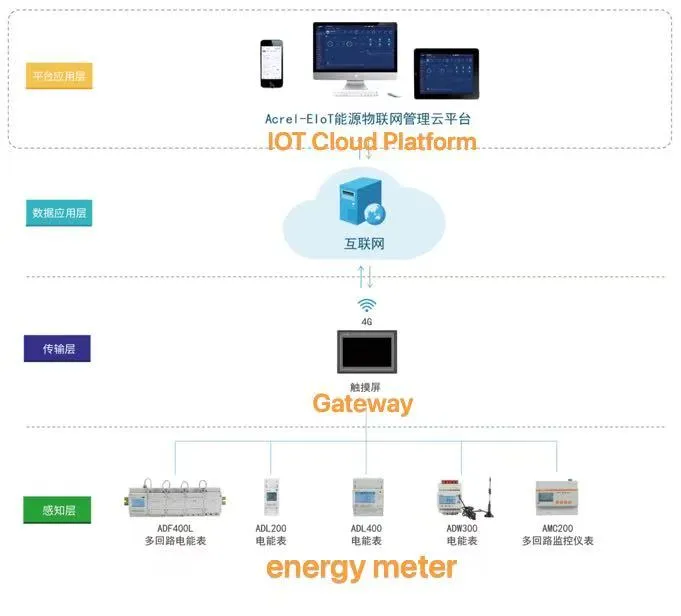
All sites connect to the EIOT IoT cloud platform for unified remote monitoring and device actuation.
The platform collects real‑time voltage, current, power and energy consumption per circuit, and triggers instant alerts for abnormal energy use, overload and phase loss to accelerate fault localisation.
Equipped with a built‑in energy‑saving engine supporting scheduled control and zone‑based load management. It automatically switches signage, lighting and HVAC on/off according to business hours and seasonal changes to eliminate wasted energy.
3. Multi‑tier group architecture supporting autonomous regional management for multinationals
The platform supports hierarchical group structures: group headquarters, country / regional divisions, cities down to individual stores. Each region can independently view energy data within its jurisdiction.
Robust role‑based permission matrix:
Group management → regional operations → store supervisors → on‑site electricians
Each user only accesses data and functions within their scope of responsibility, perfectly fitting collaborative management models for multinational corporations.
4. Multi‑dimensional data analytics supporting finance and compliance reporting
Multi‑carrier energy monitoring for electricity, water, gas, cooling and heating. Key functions include:
‑ Peak / shoulder / off‑peak tariff statistics
‑ Year‑on‑year and month‑on‑month consumption comparison
‑ Energy‑flow visualisation
‑ Sub‑circuit breakdown for lighting, HVAC, power and special‑purpose loads
‑ Automatic meter reading, cost reporting and demand‑charge calculation
Export‑ready reports facilitate financial reconciliation, energy auditing and archival compliance submissions.
5. Multi‑tenant prepaid metering for shopping‑mall retail scenarios
For supermarkets hosting independent in‑store tenants, prepaid metering is available. Each tenant is equipped with an independent metering point supporting online top‑up, automatic billing and low‑balance warnings, effectively mitigating bad‑debt risks and optimising corporate cash flow.
三、Core Solution Advantages
1.Compliant with EU electrical‑safety standards
Factory pre‑wiring, circuit redundancy and comprehensive labelling mitigate electrical hazards at retail premises.
2.Significantly reduced deployment and O&M costs
In‑factory pre‑commissioning cuts on‑site labour and travel expenditure for large‑scale deployments.
3.Granular device‑level energy visibility
Drill‑down into high‑consumption equipment, identify energy‑saving potential and generate retrofit ROI assessment.
4.Guaranteed data integrity
Automatic data backfill during communication outages; audit‑ready datasets aligned with regulatory and ESG reporting requirements.
5.Wide cross‑scenario adaptability
Proven for convenience stores, supermarkets, hotel chains, logistics depots, battery swap stations and F&B outlets. Supports mass roll‑out together with localised configuration.
四、Real‑World Project References & Achievements
Case 1: Energy‑Saving Retrofit for Global Convenience‑Store Chain
.webp)
This international convenience‑store brand operates more than 20 000 outlets worldwide. Legacy manual meter‑reading suffered from poor‑quality data and heavy workload for field inspectors.
Project scope: energy‑management platform, energy‑consumption monitoring module and intelligent lighting control.
Phase‑one deliverables included screening of high‑consumption sites, root‑cause analysis for energy waste and energy‑saving benefit calculation; seasonal timing strategies for storefront signage and outdoor lighting can be remotely pushed down from cloud.
Project Outcomes
‑ Replace paper‑based manual logging with automatic real‑time data acquisition
‑ Improve data accuracy and drastically reduce on‑site inspection workload
‑ Benchmark stores against floor area and turnover to prioritise retrofit candidates
‑ Deliver clear payback‑period calculation for HVAC, lighting and signage upgrades
Case 2: Intelligent Monitoring for Battery‑Swap‑Station Container Substation
.webp)
ADW300‑4G multifunction power meters are installed at container substations of swap stations, transmitting data over 4G to the EIOT cloud platform.
Project requirements:
‑ Automatic billing complying with local peak‑shoulder‑off‑peak tariff rules to support property‑owner utility settlement
‑ Headquarters‑level global visibility over site operation, energy consumption and cost metrics
‑ Auto‑generation of maintenance work‑orders for phase loss, over‑current and other anomalies to realise closed‑loop maintenance and guarantee 24/7 station uptime
Project Outcomes:
Realised centralised operational oversight for distributed sites, accelerated fault response and reduced network‑wide maintenance costs.
Case 3: SaaS Prepaid Energy‑Management Platform for Large‑Scale Chain Supermarket
.webp)
A regional supermarket chain hosts numerous independent in‑store tenants. Traditional manual meter‑reading and payment chasing brought low efficiency, accounting errors and persistent arrears issues.
A SaaS‑based prepaid energy‑management platform was implemented. Independent metering for tenant circuits enables online top‑up, automatic billing and arrears alerts. Headquarters utilise a data cockpit to track KPIs including recharge volume, energy consumption and arrears per store. Our scope covers hardware supply and platform delivery; local partners undertake on‑site installation; the customer executes phased national roll‑out.
Project Outcomes
‑ Fully eliminate manual meter‑reading and manual payment collection
‑ Mitigate bad‑debt risks and shorten cash‑collection cycles
‑ Transparent billing enhances tenant satisfaction and renewal rates
‑ Visualised corporate‑level KPIs support real‑estate operation and cost‑control decisions
Faced with tightening EU energy‑efficiency and sustainability legislation, refined digital energy management has become an essential capability for chain‑sector enterprises.
EIOT software‑hardware integrated intelligent distribution cabinet solution addresses key pain‑points across the chain industry: high retrofit costs, data fragmentation and compliance challenges. With fast plug‑and‑play deployment, reliable metering data, intelligent load regulation and multi‑level group permission governance, it empowers European multi‑site enterprises to achieve tangible energy‑saving & cost reduction, streamlined operations and transparent energy datasets ready for ESG reporting.

.webp)
.webp)
.webp)
.webp)
.webp)
.webp)
.webp)
.webp)
.webp)