
Language
Acrel Energy Management System: The Core Platform for Smart and Efficient Energy Operations
Dec 01, 2025
The Acrel Energy Management System (EMS) is an intelligent platform powered by IoT, cloud computing, and big data technologies. It enables real-time monitoring, detailed analysis, and optimized control of multiple energy types — including electricity, water, gas, and heat — across industrial and building environments.
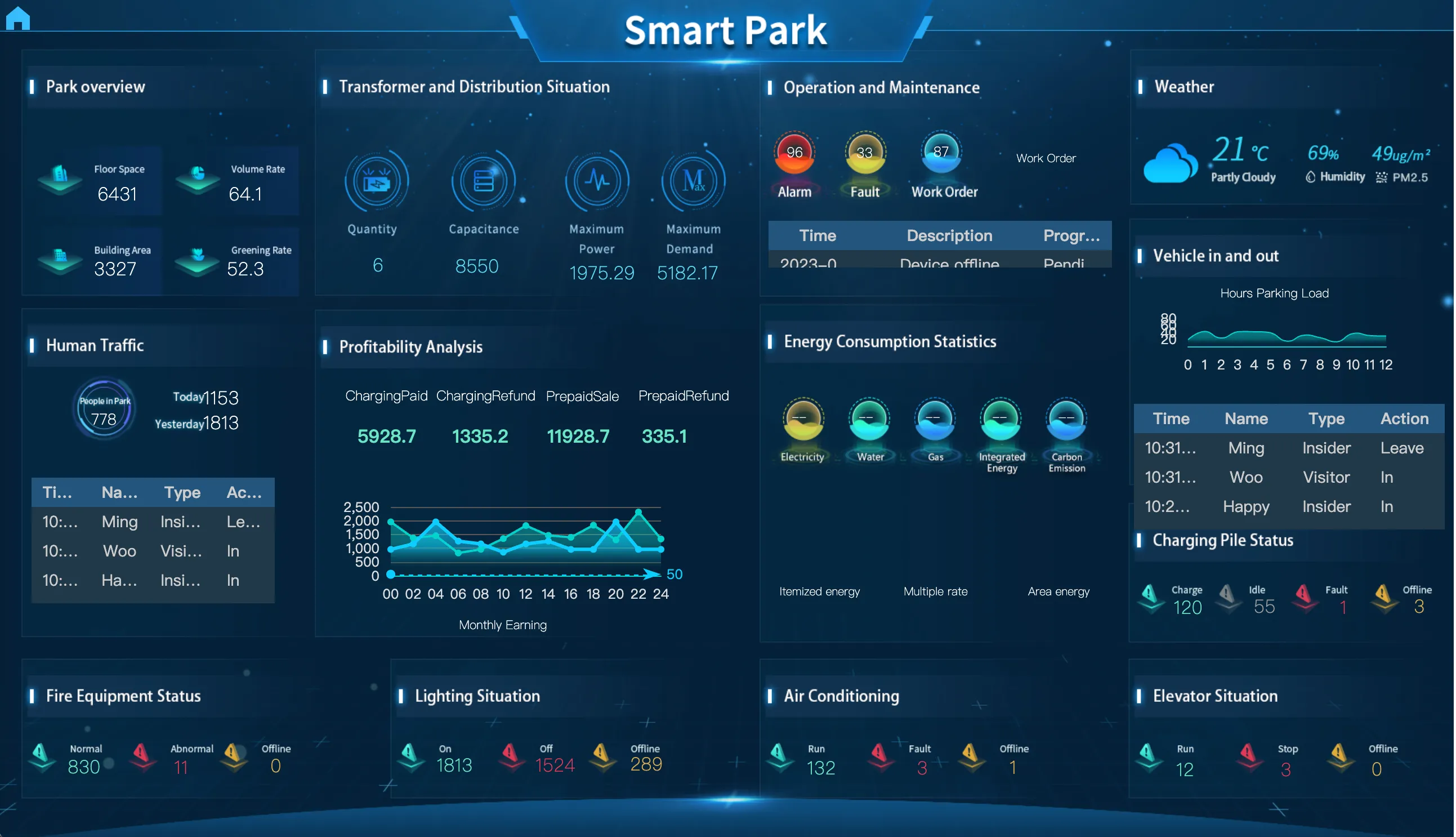
Designed with a layered distributed architecture, the system ensures a secure and scalable data framework that supports the full lifecycle of energy efficiency management — from metering and visualization to optimization and decision-making.
1.Technical Architecture & Key Capabilities
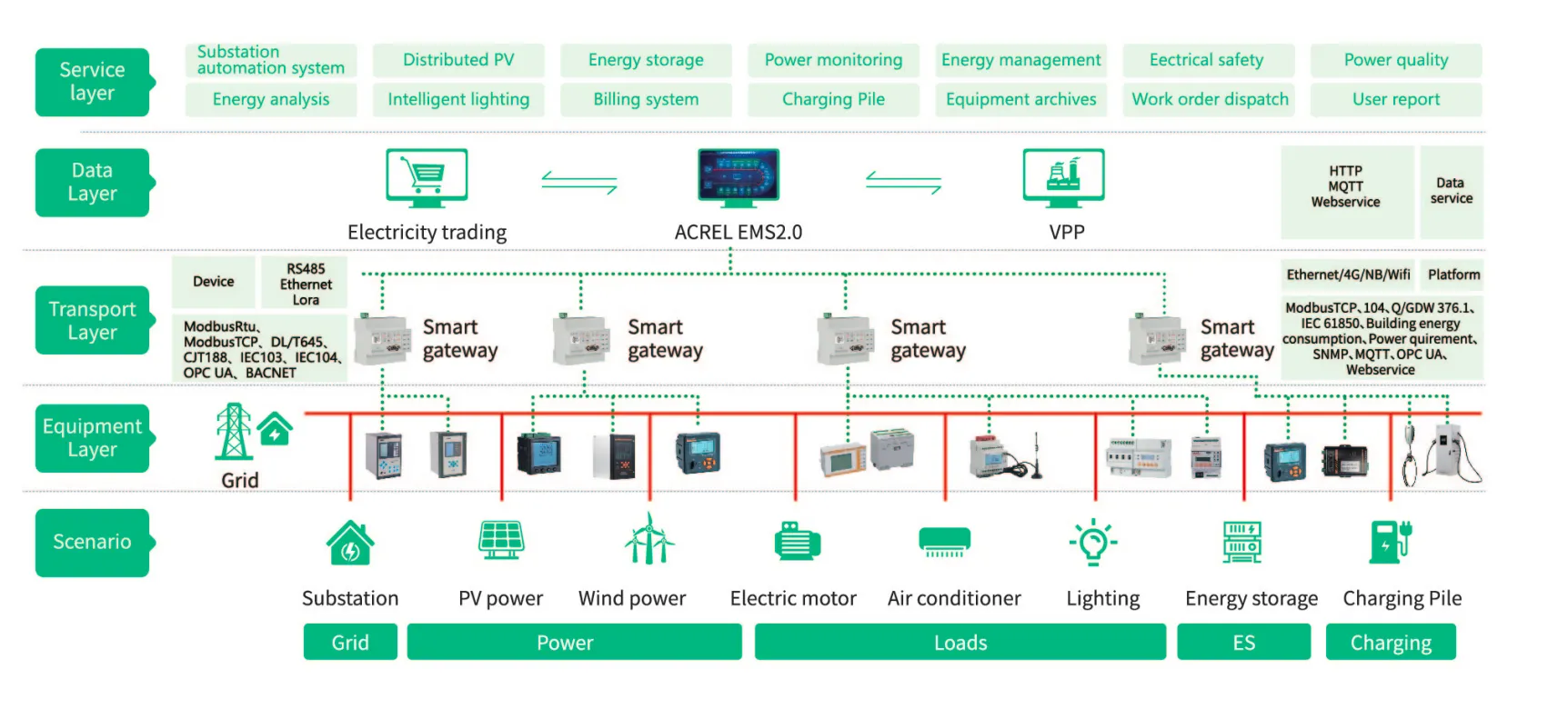
· Supervisory & Management Layer
Industrial servers and monitoring software deliver system-wide dashboards, alarm handling, and automated reporting.
· Network & Communication Layer
Supports RS485, Ethernet, and 4G connectivity via smart gateways for multi-protocol integration and reliable data acquisition.
· Field Device Layer
High-precision meters, sensors, and submeters perform real-time data collection at equipment and load points.
2.Core Function Modules
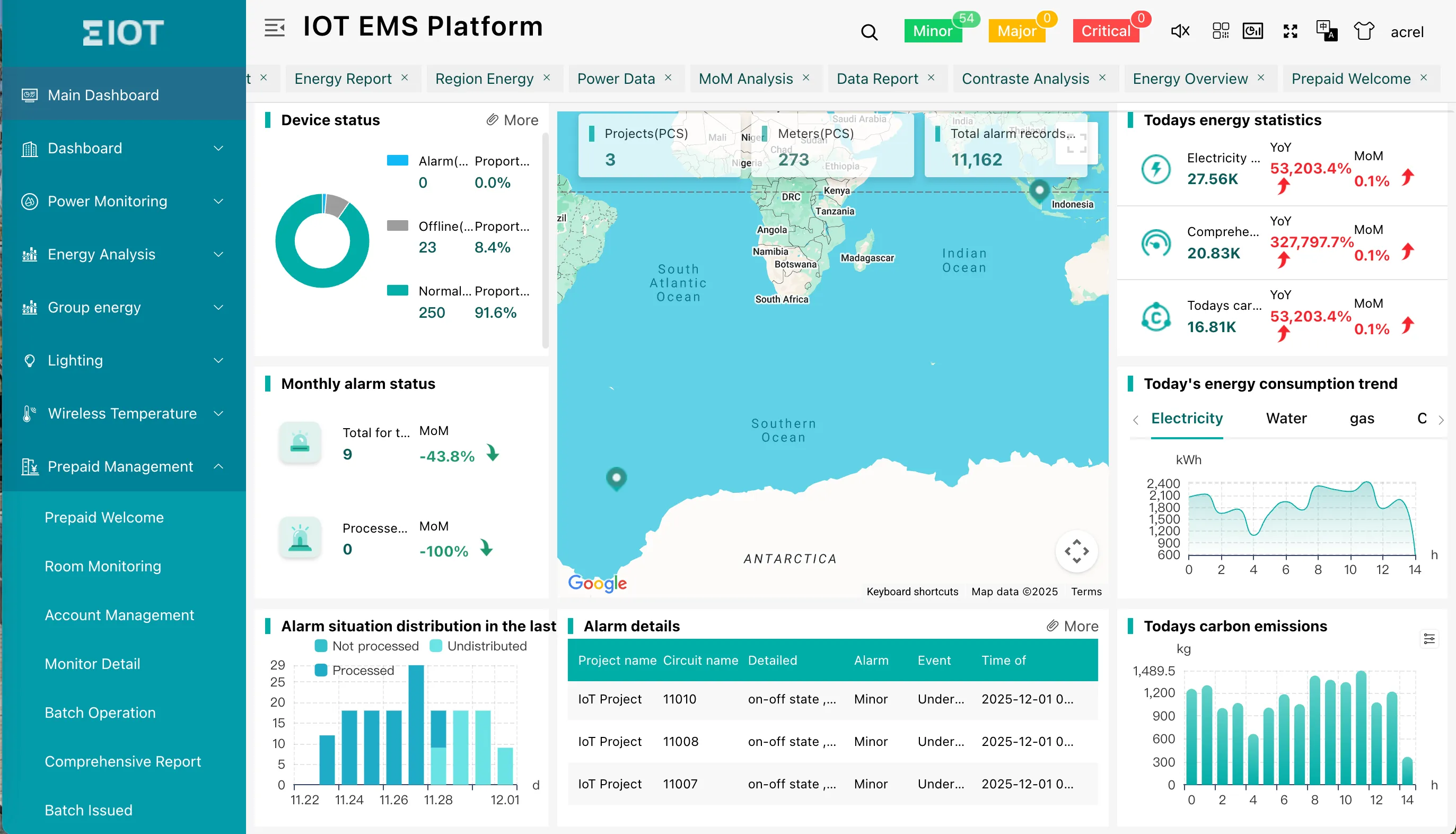
1) Real-time Monitoring & Visualization
· Live topology and energy flow diagrams
· Operational status and alarms via SMS / App / voice push
2) Efficiency Analytics
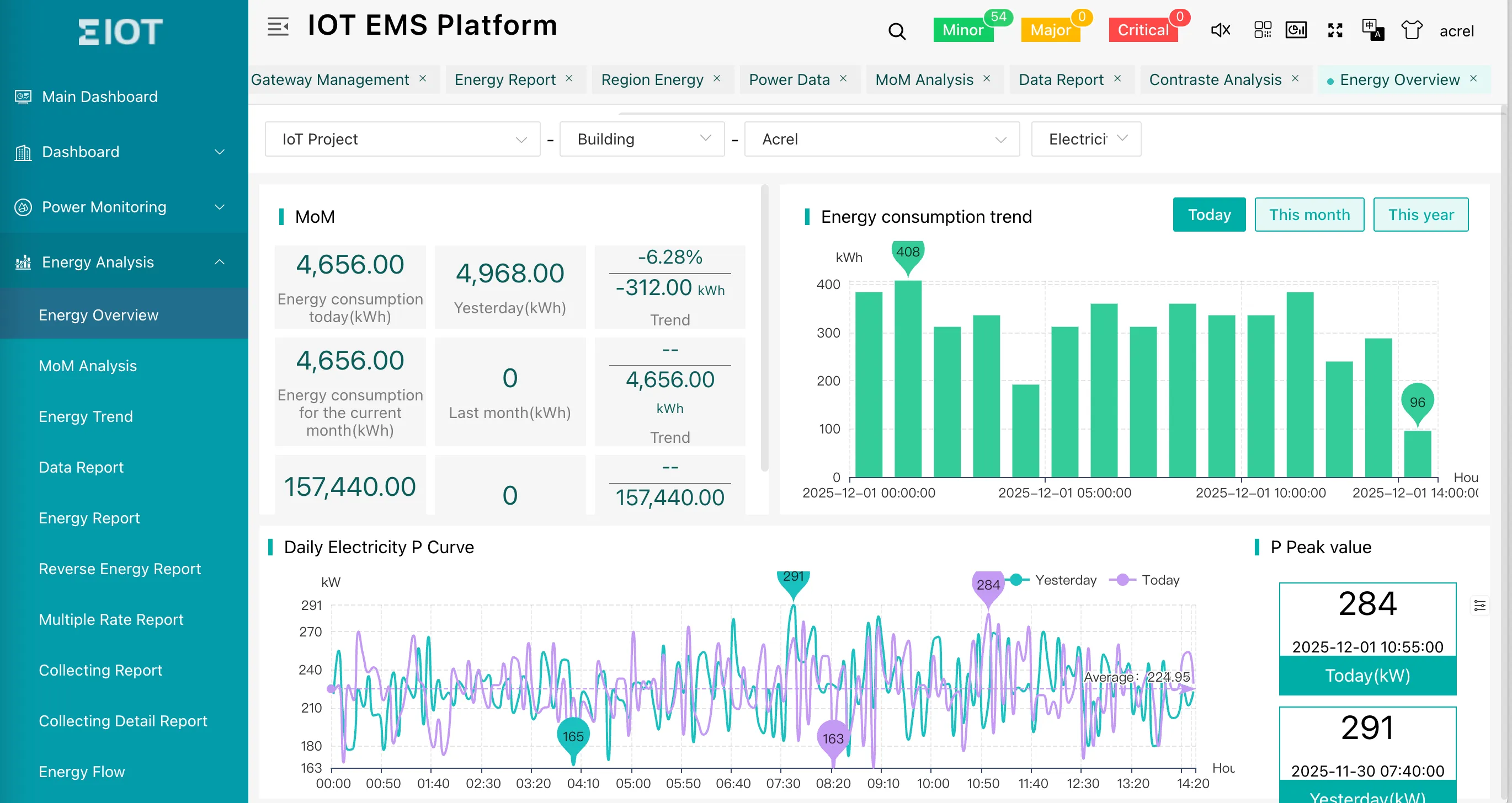
· Sub-item energy breakdown (HVAC, lighting, production lines, etc.)
· Peak-valley tariff analysis and consumption benchmarking
· Carbon emission conversion and ESG-oriented reporting
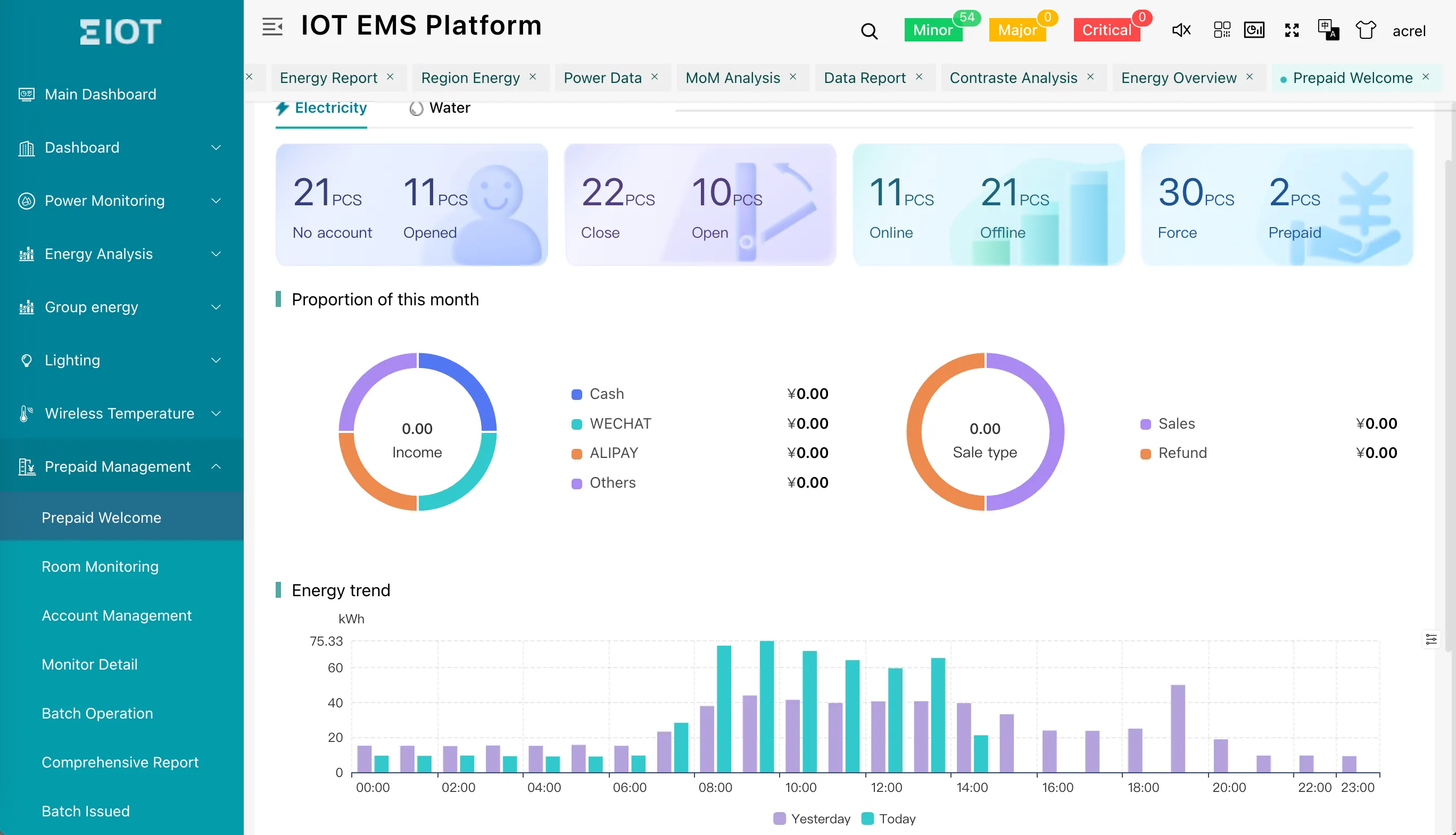
3)Prepaid Billing & Remote Control
· Supports prepaid meters with online recharge and automated disconnection/reconnection
4)AI-Driven Forecasting
· Load and demand prediction
· Anomaly identification and risk alerts
3.Application Scenarios & Success Cases
1) Public Buildings
· Energy management for transport hubs and sports venues
· Optimized HVAC & lighting strategies reduce operational costs
Example: A large stadium achieved 20% energy cost reduction after deploying sub-metering and dynamic scheduling.
2) Education & Healthcare
· Sub-item monitoring ensures transparent energy budgeting
· HVAC optimization based on environmental data achieved 15% efficiency gain in hospitals
Example: A university saved over USD 100K annually with peak-shaving strategies.
3) Industrial & Transportation Infrastructure
· Real-time monitoring for tunnels and manufacturing facilities
· Load control with prediction algorithms improves efficiency by 10–18%
4.Future Outlook
Aligned with global carbon-neutral goals, Acrel will continue enhancing AI algorithms for:
· Load prediction and fault diagnosis
· Integrated control of generation-grid-load-storage
· Sustainable energy ecosystem development
Acrel remains committed to helping partners accelerate digital transformation and unlock the full value of energy data.
The Latest






Contact US
Product Information
Quantity
Unit
Piece
Support order samples, customization, wholesale direct, and complete payment. If the product you look for does not have corresponding customized content, pls fill out the form below to contact us, and we will reply ASAP.